

Regulatory Standards
Find out how One Manchester meets the Regulatory Standards as a values-led organization
What are the Regulatory Standards?
The Regulator of Social Housing sets standards that registered housing providers must meet. These standards help make sure customers receive safe homes, good services, fair treatment, clear information and strong financial management.
The seven standards cover two areas:
Consumer Standards: Safety and Quality; Transparency, Influence and Accountability; Neighbourhood and Community; Tenancy.
Economic Standards: Governance and Financial Viability; Value for Money; Rent.
How do the Standards apply?
One Manchester provides social housing, so it must meet these standards and assess its compliance each year. The Regulator also carries out inspections of large registered providers as part of its regulatory programme.
This summary separates current evidence from planned improvement activity. Current evidence refers to assurance, performance, governance arrangements and completed activity recorded in the 2025/26 self-assessments. Planned improvements refer to work that will continue, be implemented or be strengthened during 2026/27.
At a glance
One Manchester’s 2025/26 self-assessments conclude that it meets the Regulatory Standards, based on current evidence recorded in the assessments. This evidence includes valid stock condition surveys for 98.23% of homes, 99.92% compliance with the Decent Homes Standard, Board and committee oversight, internal and external assurance, and published performance information. The assessments also identify planned improvement activity for 2026/27, including further work on repairs, communication, customer influence, asset and sustainability strategies, and preparation for forthcoming regulatory changes.
Consumer Standards
Safety and Quality

Customers should live in safe, well-maintained homes. One Manchester uses stock condition data, safety checks, repairs performance and investment plans to understand the condition of homes and target work where it is needed.
- 98.23% of homes had a valid stock condition survey at year end, with remaining homes targeted for inspection.
- 99.92% of homes met the Decent Homes Standard, with action plans for the remaining homes.
- Health and safety compliance covers gas, electrical, water, lifts, fire, carbon monoxide and smoke detection, with Board reporting, operational monitoring and third-party assurance.
- Repairs are managed against agreed priorities, including 24-hour emergency, 5-working-day significant, 10-day urgent, 45-day appointable and 90-working-day planned timescales. Dedicated processes are used to track damp, mould and other hazards.
- Adaptations support is available, with minor works completed by One Manchester and major adaptations supported through Manchester City Council.
What customers can expect
In 2026/27, customers can expect clearer repair appointments and updates, stronger damp and mould case tracking, continued delivery of the current requirements of Awaab’s Law, the law requiring landlords to investigate and fix some hazards within set timescales, and preparation for its next phase, Decent Homes 2 and updated asset and sustainability strategies.
Transparency, Influence and Accountability

Customers should be treated fairly, understand services, see performance, raise concerns and influence decisions. One Manchester supports this through customer voice arrangements, accessible information, published performance, complaints learning and Board oversight.
- Satisfaction that One Manchester treats tenants fairly and with respect increased to 81.73% in 2025/26.
- More than 1,000 instances of customer feedback from in-person and digital consultation informed service standards and customer-led groups.
- Satisfaction with being kept informed rose from 73.79% to 79.12%.
- An internal audit in 2025 provided substantial assurance on complaints handling, and complaint learning sessions and customer scrutiny are used to improve services.
- One Manchester has a formal process for identifying and escalating potential non-compliance with the Standards. Material issues are reported to the Regulator when required.
What customers can expect
In 2026/27, customers can expect more visible customer influence through customer voice groups, clearer service standards, accessible information, regular performance updates, and continued learning from complaints and feedback.
Neighbourhood and Community

Customers should be able to live in safe, well-maintained neighbourhoods. One Manchester works with customers, Manchester City Council, Greater Manchester Police and other partners to improve shared spaces, respond to anti-social behaviour and hate incidents, and support people affected by domestic abuse.
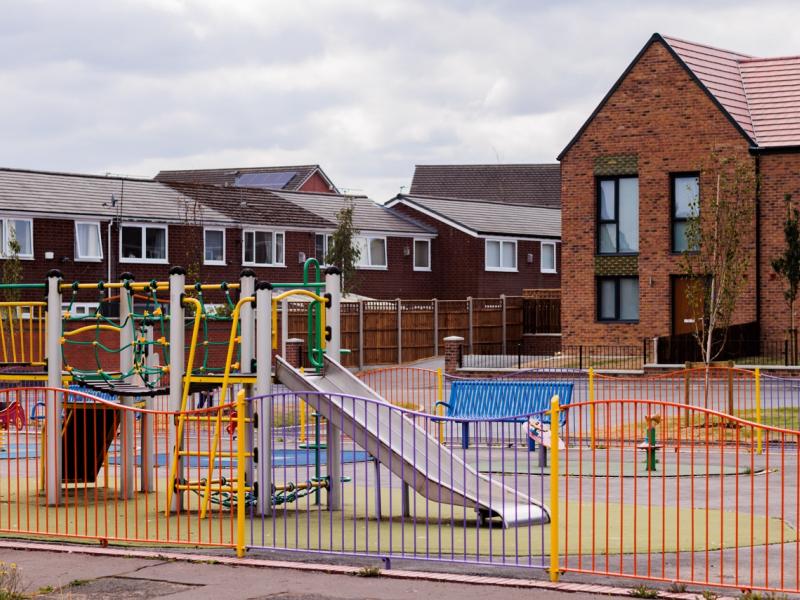
- Consultation on 12 play areas led to repairs and upgrades completed in May 2025.
- Neighbourhood inspections, See It, Say It reporting and Fire Risk Assessments support shared-space safety.
- Community safety work includes updated anti-social behaviour, domestic abuse and hate behaviour policies, clearer reporting and support arrangements, and partnership working.
- Board updates, policy reviews and internal audit support assurance over community safety, anti-social behaviour and domestic abuse services.
What customers can expect
In 2026/27, customers can expect continued work to support safer shared spaces, stronger partnership working with the council, police and local organisations, clearer anti-social behaviour support, and further action on community safety and domestic abuse support.
Tenancy
Customers should be treated fairly when applying for, moving home or managing a tenancy. One Manchester supports fair lettings, tenancy sustainment, suitable tenure and mutual exchange.
- Allocations are managed through Manchester Move, council nomination arrangements and One Manchester policies.
- Tenancy Experience Visits and neighbourhood services help identify support needs early.
- Customers at risk of court action or eviction are referred to financial inclusion and partner support.
- Mutual exchange support is available through policy guidance, HomeSwapper and local hub drop-ins.
What customers can expect
In 2026/27, customers can expect continued focus on fair and transparent lettings, early support to help customers sustain their tenancy, clear information about tenancy rights and responsibilities, and practical support for mutual exchanges and suitable moves.
Useful links
Economic Standards
Governance and Financial Viability

Customers should have confidence that One Manchester is well run, financially stable and able to protect homes and services. This is supported by Board and committee oversight, risk management, internal and external audit, specialist advice, regulatory reporting and published information.
- Clear governance arrangements set out how decisions are made, approved and overseen.
- The Board approves financial and business plans and considers how One Manchester would respond to financial pressures.
- Financial performance and long-term investment plans are regularly monitored to protect homes, services and financial stability.
- Stock condition data informs long-term investment planning so that work on homes is planned and funded.
What customers can expect
In 2026/27, customers can expect continued clear oversight of decisions, strong financial monitoring, active risk management and assurance that social housing assets are protected for current and future customers.
Value for Money

Customers should see that rent and service charge income is used carefully to support good homes, good services and long-term investment. One Manchester’s Value for Money Strategy links money and resources to corporate priorities, customer outcomes and performance reporting.
- Value for money is reported through statutory accounts, the Customer Annual Report, Sector Scorecard and value-for-money measures.
- Performance is monitored at appropriate levels across One Manchester.
- Homes and other assets are reviewed to help make the best use of resources and support customer needs.
- Ongoing improvement work supports better services, customer experience and efficiency.
What customers can expect
In 2026/27, customers can expect continued work to make better use of resources, improve efficiency, publish clear performance information, and focus investment decisions on customer outcomes and long-term value.
Rent
Rents are reviewed annually by the Board and set in line with government requirements, the Rent Standard and the Government’s Rent Policy Statement. Appropriate checks provide assurance that rents are set correctly. The 2025/26 assessment was completed against the applicable Rent Standard for that period, with further assurance planned against the updated Rent Standard.
What customers can expect
Customers can expect rents to be set in line with regulatory requirements, supported by Board oversight and assurance checks that rent-setting remains accurate and fair.
Useful links
Overall summary
One Manchester’s 2025/26 self-assessments record current evidence that supports its conclusion that it is meeting the Regulatory Standards. This evidence includes performance information, customer feedback, audit and assurance, and Board and committee oversight. The assessments also set out planned 2026/27 improvement activity, which will be used to strengthen services, respond to customer feedback and prepare for future regulatory requirements.
For customers, the main commitments are to keep homes safe and well maintained, improve repairs and communication, listen and act on feedback, treat customers fairly, support safer neighbourhoods, help customers sustain tenancies, and manage money responsibly and transparently.
One Manchester will continue to use customer feedback, performance information, complaints learning and regulatory requirements to improve services and outcomes.